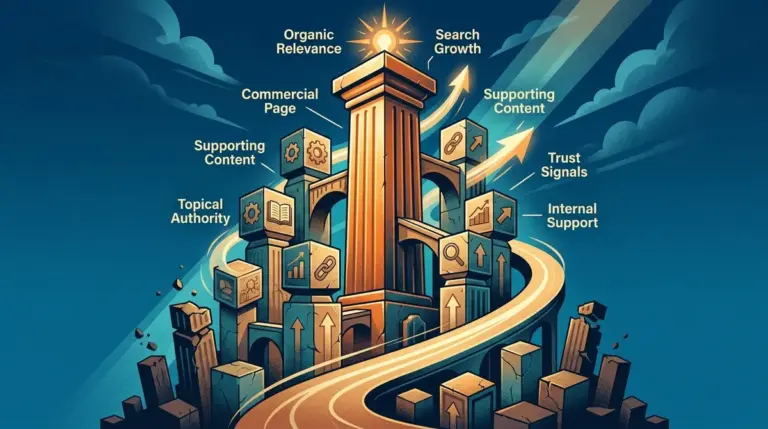


Stop using the term "link juice" if you are pitching a board of directors or a sophisticated marketing lead. While the term has survived since the early days of the Google toolbar, it implies a simplistic, liquid-like flow of power that no longer reflects how modern search algorithms evaluate value. Link equity is the professional standard. It represents the calculated transfer of authority, relevance, and trust from one page to another. Understanding the distinction is the difference between chasing hollow metrics and building a moat of topical authority that competitors cannot easily replicate. Link equity is the professional standard that reflects a more accurate view of a link's value.
The Technical Shift from Juice to Equity
The term "link juice" suggests that every link carries a certain amount of "power" that can be poured into a site to make it rank. This mental model leads to poor acquisition strategies, such as buying high-volume, low-relevance backlinks in the hopes that the "juice" will eventually move the needle. In reality, Google’s evaluation of a link is far more binary and nuanced. Link equity is not a volume; it is a signal of endorsement within a specific context.
Link equity is determined by several hard technical factors that "juice" ignores:
- Topical Relevance: A link from a high-authority gardening site to a SaaS platform provides significantly less equity than a link from a peer-reviewed tech journal.
- Link Position: Links embedded within the main editorial body carry more equity than those buried in footers or sidebars.
- HTTP Status: Equity is diluted through 301 redirects and completely severed by 404 errors or 302 temporary redirects.
- Crawlability: If the linking page is blocked by robots.txt or has a "noindex" tag, no equity is transferred, regardless of the site's perceived strength.
- Link Attributes: The presence of rel="nofollow", rel="sponsored", or rel="ugc" signals to search engines that the equity transfer should be ignored or heavily discounted.
The Decay of the PageRank Metaphor
In the early 2000s, PageRank was a public-facing metric. You could see a green bar in your browser and know exactly how much "juice" a page had. When Google killed the public PageRank display, the industry shifted toward third-party metrics like Domain Authority (DA) or Domain Rating (DR). These are useful proxies, but they are not link equity.
Link equity is page-specific. A site might have a high domain-level authority, but if the specific page linking to you is an "orphan" page with no internal links and zero organic traffic, the equity transfer is negligible. Sophisticated SEOs look at the "In-Link" profile of the specific URL, not just the homepage of the referring domain. If the page itself isn't ranking for anything, it has very little equity to give.
Relevance as the Primary Multiplier
Relevance is the most overlooked component of link equity. Google’s transition toward neural matching and entities means the algorithm understands the "aboutness" of a page. If you are building a cluster around "enterprise cybersecurity," a link from a general news site is a general endorsement. A link from a cybersecurity niche site is a topical endorsement. The latter provides a higher degree of equity because it reinforces your site’s position as an authority within a specific knowledge graph.
Pro Tip: Audit your outbound links as carefully as your inbound ones. Linking out to high-authority, topically relevant sources does not "leak" your link juice; instead, it provides search engines with context about your page's neighborhood, potentially increasing your own topical authority signals.
Internal Link Equity: The ROI Lever
Most site owners obsess over external link building while ignoring the massive equity already sitting on their own servers. Internal link equity is the strategic distribution of your existing "power" to the pages that matter most—your money pages.
High-traffic blog posts often accumulate significant natural backlinks. If those posts do not link back to your core service pages or product categories, that equity is trapped. By implementing a hub-and-spoke internal linking model, you can funnel equity from high-performing informational content to high-intent commercial pages. This doesn't just help with rankings; it improves the crawl depth of your site, ensuring that Google discovers and indexes deep pages more frequently.
Identifying Equity Leaks
You are losing link equity every day if your site architecture is messy. Common leaks include:
Redirect Chains: Every step in a redirect chain (A to B to C) results in a minor loss of equity. Always link directly to the final destination URL.
Broken Internal Links: A link to a 404 page is a dead end for equity. It wastes crawl budget and provides zero value to the target page.
Non-Descriptive Anchor Text: Using "click here" or "read more" fails to pass the descriptive equity that helps Google understand what the target page is about. Use keyword-rich, natural anchor text to maximize the equity transfer.
Quantifying Value in Link Acquisition
When evaluating a potential link placement, stop asking "how much juice does this have?" and start asking "how much equity will this transfer?" To answer this, look at the outbound link ratio of the referring page. If a page has 200 outbound links to various unrelated sites, the equity is diluted to the point of irrelevance. You want links from pages with a low number of high-quality outbound links.
Furthermore, check the organic traffic trend of the referring site. A site that is losing traffic or has been hit by recent core updates is a "leaking bucket." The equity it provides is volatile and potentially toxic. True link equity comes from stable, growing sites that Google clearly trusts to provide accurate information to users.
Strategic Execution for Maximum Authority
To move beyond the "link juice" mindset, your SEO strategy must prioritize the integrity of the link path. This means ensuring that every link—whether internal or external—is a logical connection between two relevant pieces of content. Focus on building "equity clusters" where groups of related pages support each other through a dense web of internal links, all pointing toward a central pillar page. This structure signals to search engines that your site is not just a collection of pages, but a structured repository of expertise.
Monitor your "equity-heavy" pages. These are the pages on your site with the most external backlinks. Use them as launchpads for new content. By placing an internal link on a high-equity page to a new, lower-authority page, you significantly accelerate the indexing and ranking process for that new content. This is the practical application of link equity in a commercial environment.
Frequently Asked Questions
Does "no-following" a link save my link juice?
No. This is a common myth. Google changed its handling of nofollow years ago. While a nofollow link does not pass equity to the target, it also doesn't "save" it for other links on the page. The equity that would have gone to that link is simply deleted from the calculation.
Is link equity the same as PageRank?
Link equity is the modern evolution of PageRank. While PageRank was the original algorithm for weighting links, link equity encompasses a broader range of signals including topical relevance, user intent, and link attributes that the original PageRank formula did not prioritize.
Can a page have too much link equity?
A page cannot have too much equity, but it can have an unnatural link profile. If a page gains a massive amount of equity from irrelevant or low-quality sources in a short period, it may trigger a manual review or algorithmic filter for link manipulation. Quality and relevance always trump raw volume.