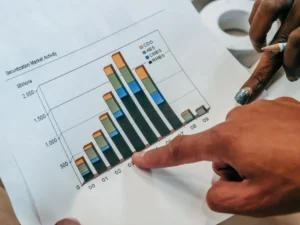
An off-page SEO checker evaluates the external signals that influence how search engines and users perceive your site: backlinks, referring domains, anchor text patterns, link quality, brand mentions, citation consistency, and the trust context around those signals. Used correctly, it is not a vanity dashboard for counting links. It is a decision tool for finding authority gaps, spotting risk, and identifying the supporting content and digital PR opportunities that strengthen topical relevance over time.
What an off-page SEO checker actually measures
The best off-page SEO checkers combine link data with context. They show who links to you, what pages attract those links, how anchor text is distributed, whether links are follow or nofollow, how quickly new links appear, and whether your backlink profile aligns with the topics you want to own. For publishers and niche site owners, this matters because authority is rarely built by one homepage link burst. It comes from a credible pattern of references to useful, specific content across a topic cluster.
A strong checker should help you review:
- Referring domains by relevance, not just quantity
- Backlinks to key commercial and informational pages
- Anchor text concentration and over-optimization risk
- Lost and newly acquired links
- Brand mentions that could become links
- Competitor link gaps tied to topic coverage
When to use an off-page SEO checker
Use an off-page SEO checker when rankings stall despite solid on-page work, when launching a new content cluster, after a digital PR campaign, during a site acquisition review, or when traffic drops suggest link loss or trust issues. It is especially useful after publishing high-value supporting content that should attract citations but has not yet earned traction.
It is also the right tool when your site has links, but not the right links. Many sites look healthy at a glance because they have enough referring domains, yet they fail to rank because those links point to shallow pages, come from weak topical neighborhoods, or do not reinforce the core subject areas the site wants to dominate.
What to check first
Top-linked pages
Review which URLs attract the most backlinks. If most links point to your homepage, a giveaway, or a random data page while your money pages and supporting articles remain unreferenced, your authority is not flowing where it needs to. This often signals a content architecture problem, not just a link problem. You may need stronger internal linking from link-earning assets into your commercial and mid-funnel pages.
Referring domain relevance
A backlink from a site in your subject area usually contributes more strategic value than a random mention from an unrelated directory or expired blog network. Check whether linking domains overlap with your niche, adjacent industries, trade media, expert blogs, and credible publisher ecosystems. Relevance compounds trust. Irrelevant volume often does not.
Anchor text distribution
Healthy anchor profiles are mixed: branded anchors, natural phrases, URL anchors, topical partial matches, and occasional exact-match terms. If your checker shows a heavy concentration of commercial anchors, that is a risk signal. If it shows almost no topical anchors at all, your authority may be too vague to support competitive rankings.
Link velocity and link loss
Sudden spikes can be normal after a campaign, but unstable growth followed by heavy link loss can indicate weak placements or low-value outreach. A checker should help you compare new versus lost links so you can see whether authority is actually accumulating.
Brand mentions and implied authority
Not every authority signal is a clickable link. If your brand is being cited without a link, mentioned in roundups, quoted in industry commentary, or referenced in community discussions, that is an opportunity. These mentions can often be converted into links, but they also help validate market presence and trust.
How off-page analysis supports topical authority
Off-page SEO works best when it reinforces a site structure built for depth. If you want to rank for a competitive topic, your backlink profile should not only support one pillar page. It should validate the entire topic cluster: definitions, comparisons, use cases, statistics, process guides, and expert commentary. An off-page SEO checker helps you see whether external authority is concentrated too narrowly or distributed across the supporting content that search engines expect from a credible source.
For example, if your site targets local SEO software, you should not rely only on links to a “best tools” page. You want references to your guides on citation cleanup, GBP optimization, review management, local landing pages, and reporting frameworks. That breadth signals expertise. It also gives your internal linking structure more authority to circulate.
What a useful report should tell your team
A commercially useful off-page review should produce actions, not charts for their own sake. Your team should be able to answer:
- Which pages deserve link-building support right now
- Which supporting articles could earn links with better positioning
- Where competitor authority comes from by topic
- Which risky anchors or weak placements need attention
- How internal links should route authority into priority pages
Short workflow example
A publisher wants to improve rankings for a high-value affiliate cluster. The off-page SEO checker shows that competitors have links pointing not just to buying guides, but also to informational support pages like comparisons, troubleshooting posts, and original data content. The publisher’s own backlinks mostly hit the homepage and a few outdated articles. The fix is clear: refresh the support content, create one citation-worthy asset, reclaim unlinked brand mentions, and add stronger internal links from linked pages into the target cluster. That turns off-page analysis into a topical authority plan rather than a generic link-building campaign.
Common mistakes when using an off-page SEO checker
The biggest mistake is treating every referring domain as equal. Another is chasing authority scores without checking whether links support the topics that matter to the business. Teams also miss value when they ignore link destination pages, fail to monitor lost links, or separate off-page work from content strategy. Off-page SEO is strongest when it validates expertise already visible on-site through complete, well-structured supporting content and clear trust signals such as author credibility, editorial standards, citations, and consistent brand presence.
How Insane Authority approaches off-page SEO
At Insane Authority, off-page analysis is used to strengthen organic relevance, not inflate dashboards. That means evaluating whether external signals support the right topic clusters, whether trust is reinforced by credible mentions and citations, and whether internal depth is strong enough to convert authority into rankings. The goal is a backlink profile that makes sense for the subject matter, the audience, and the commercial pages that need to perform.
FAQ
Is an off-page SEO checker only for backlinks?
No. Backlinks are central, but a good review also considers brand mentions, citation consistency, topical relevance, anchor patterns, and how authority supports your site architecture.
How often should I run an off-page SEO check?
Monthly is a good baseline. Run checks more often during active campaigns, after site migrations, or when rankings change sharply.
Can an off-page SEO checker improve rankings by itself?
No. It identifies gaps and opportunities. Rankings improve when you act on the findings with better content, stronger internal linking, digital PR, link reclamation, and trust-building assets.
What matters more: more links or better links?
Better links. Relevant, credible links to the right pages usually outperform larger volumes of weak or unrelated links.