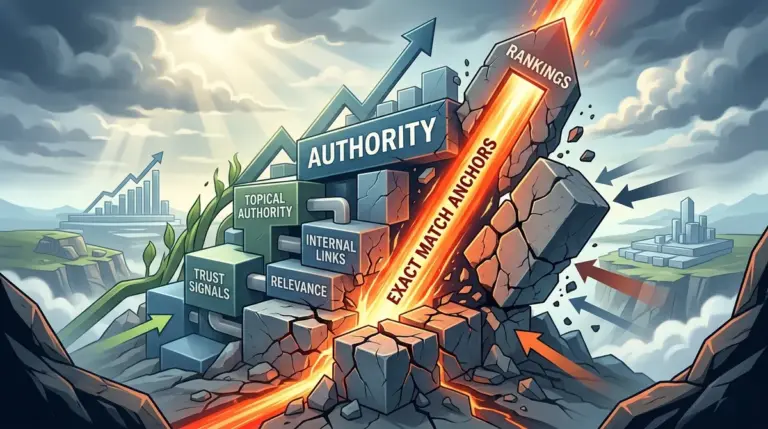


Link building is fundamentally a resource allocation problem. For SEO professionals managing budgets, the choice between editorial links and directory links isn't just about price; it is about the difference between building topical authority and merely checking a box for entity validation. While one provides the semantic fuel needed to rank for competitive terms, the other serves as a foundational signal of existence. This distinction highlights the core difference between truly valuable links and those that are just noise, explaining why random backlinks rarely build authority.
The Mechanics of Editorial Authority
An editorial link is a contextual citation placed within the body of an article, typically earned through high-quality outreach, PR, or exceptional content. These links carry the highest weight in modern search algorithms because they represent a human-vetted endorsement. When a reputable publication links to your site within a relevant paragraph, they are passing more than just PageRank; they are passing topical relevance.
Best for: Improving rankings for high-competition keywords and establishing E-E-A-T (Experience, Expertise, Authoritativeness, and Trustworthiness).
The value of an editorial link is derived from its placement. Unlike footer or sidebar links, a link embedded in a 1,000-word deep dive on a specific topic tells search engines that your site is a primary source of information. Google’s natural language processing (NLP) models analyze the surrounding text—the "link neighborhood"—to determine the exact context of the referral. If you are linked from a paragraph discussing enterprise SaaS security, that link provides a much stronger signal than a generic listing in a business index.
- Contextual Relevance: The link exists within a thematic framework that matches your target page.
- Traffic Potential: Editorial links on high-traffic sites drive qualified referral visitors, which acts as a secondary trust signal.
- Longevity: These links are rarely removed and tend to grow in value as the host page gains its own backlinks over time.
- Natural Anchor Text: Editorial placements allow for varied, descriptive anchor text that looks organic to search crawlers.
Directory Links as Entity Signals
Directory links are often dismissed as "old school" SEO, but this is a tactical error. While the era of submitting to thousands of generic web directories is dead, niche-specific and local directories remain vital for entity validation. A directory link is a structured listing that typically includes your business name, address, phone number (NAP), and URL.
Best for: Local SEO, new site indexing, and establishing a baseline "footprint" for a new brand.
The primary function of a directory link today is not to pass massive amounts of authority, but to confirm to search engines that your business is a legitimate entity. For a local plumber, a listing on a regional trade association directory or a local chamber of commerce site is a critical trust signal. These links help Google triangulate your location and industry. However, a link from a "General Web Directory 2024" that accepts any site for $5 is likely to be ignored or, in extreme cases, flagged as a footprint for link manipulation.
Warning: Avoid "link farms" disguised as directories. If a directory contains thousands of links across unrelated niches (e.g., "Gambling" next to "Pet Supplies"), it offers zero editorial value and may dilute your site's topical integrity.
Comparing Impact and ROI
When weighing these two options, you must consider the "velocity vs. depth" trade-off. Directory links are easy to acquire and scale. You can build 50 directory citations in a week for a few hundred dollars. This provides a quick foundation, but you will quickly hit a ceiling. You cannot rank for "Best CRM Software" using only directory links, no matter how many you have.
Editorial links require significant investment—either in time for manual outreach or in capital for high-end PR services. A single editorial link from a Tier 1 publication like Forbes, TechCrunch, or a major industry journal can often outweigh 500 directory links. This is because search engines prioritize the "editorial gatekeeper" effect. If a site with high standards allows a link to your content, that link is inherently more trustworthy than a link anyone can buy for a flat fee.
Cost and Resource Requirements
Editorial links often cost between $300 and $1,500 per placement when factoring in content creation and outreach labor. Directory links are significantly cheaper, often ranging from free to $50. For a mature site, the ROI on an expensive editorial link is almost always higher because it moves the needle on high-value keywords that drive actual revenue. For a brand-new site, a handful of high-quality directory links is a necessary first step to get indexed and recognized as a legitimate business entity.
The Role of Niche Relevancy
The gap between editorial and directory links narrows when the directory is highly specialized. A link from a legal directory that only accepts verified bar-certified attorneys carries significant weight within the legal niche. This is because the directory itself has topical authority. When choosing directories, prioritize those that have a manual review process. If a human has to approve your listing, the link is exponentially more valuable than one generated by an automated script.
Editorial links should follow the same logic. A link from a general news site is good, but a link from a trade publication specifically focused on your industry is better. Search engines look for "semantic proximity." If you sell cloud storage, a link from a cloud computing blog is more relevant than a link from a general lifestyle magazine, even if the lifestyle magazine has a higher Domain Rating (DR).
Building a Balanced Link Strategy
Effective SEO does not rely on a single link type. Instead, it uses a tiered approach where directory links provide the foundation and editorial links provide the growth. Start by securing your core entity signals through 10-20 high-quality, niche-specific directories. This establishes your brand's presence and provides a "moat" of basic citations.
Once the foundation is set, shift 90% of your resources toward editorial acquisition. Focus on creating "linkable assets"—data studies, comprehensive guides, or unique insights—that give editors a reason to link to you. This strategy ensures that your link profile looks natural. A profile consisting of 100% editorial links can look just as suspicious to an algorithm as one consisting of 100% directory links. A natural profile is messy; it includes a mix of no-follow citations, directory listings, and high-authority editorial mentions.
Strategic Execution Steps
1. Audit your current profile to see if you lack basic entity signals. If your NAP (Name, Address, Phone) isn't consistent across major directories, fix this first.
2. Identify the top 5 trade publications in your niche. These are your primary targets for editorial outreach.
3. Develop content that solves a specific problem or provides new data for those publications.
4. Execute a targeted outreach campaign to secure contextual placements within existing or new articles.
Frequently Asked Questions
Are directory links still worth the effort in 2024?
Only if they are niche-specific or local. General-purpose directories that exist solely to sell links are largely ignored by Google. Focus on directories that require manual verification or are associated with professional organizations.
How many editorial links do I need to rank?
There is no fixed number. It depends entirely on the "link gap" between you and the top-ranking competitors for your target keyword. If the top results have 50 high-quality editorial links, you will likely need a similar number of high-relevance placements to compete.
Do editorial links have to be 'Dofollow' to matter?
While Dofollow links pass direct authority, Nofollow editorial links from high-authority sites (like major news outlets) still provide significant value. They drive traffic, enhance brand recognition, and contribute to a natural-looking link profile that search engines trust.
Can I use directory links to fix a penalty?
No. If your site has been penalized for manipulative link building, adding directory links will not help. You need to remove or disavow the toxic links and replace them with high-quality, earned editorial links to regain trust with search engines.