

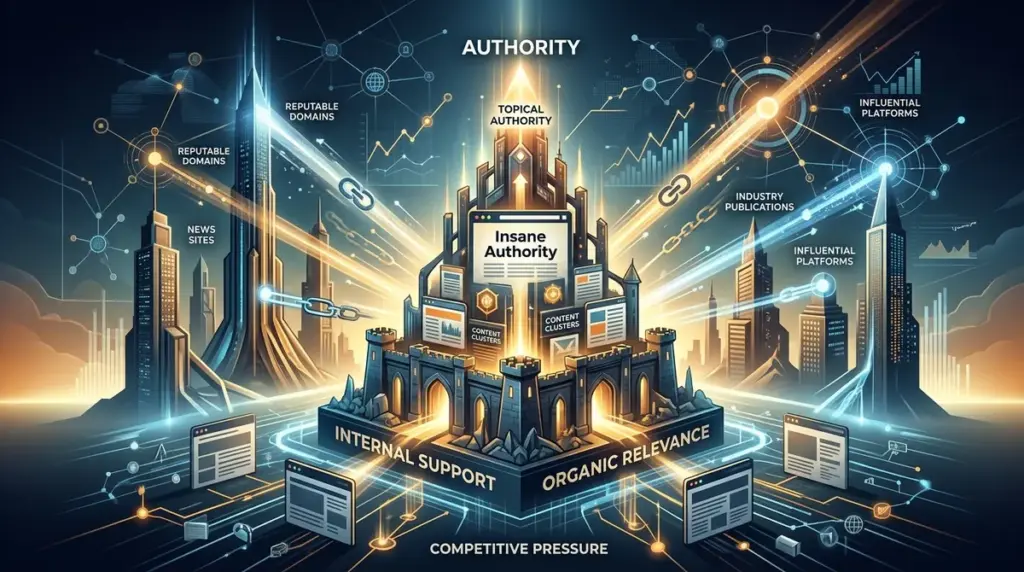
Website authority is not a metric found in a dashboard; it is a market perception validated by search engines. While on-page optimization ensures your site is technically sound and topically relevant, off-page SEO acts as the external validation required to compete for high-intent keywords in saturated niches. For publishers and agencies, the goal has shifted from accumulating a high volume of backlinks to securing endorsements from established entities within a specific knowledge graph. If your off-page strategy still prioritizes Domain Rating (DR) over topical alignment, you are likely overpaying for signals that Google’s current algorithms are increasingly programmed to ignore. This shift is particularly relevant for publishers and agencies who need to demonstrate expertise in specific verticals to attract and retain clients.
The Shift from Link Volume to Entity Validation
Modern search algorithms treat the web as a collection of entities—people, places, and organizations—rather than just a series of interconnected documents. When a reputable site in the fintech space links to a SaaS provider, it isn't just passing "link juice"; it is providing a thematic endorsement. This is the core of topical authority. If a high-authority gardening blog links to your cybersecurity firm, the link has negligible value because there is no entity-level overlap. The search engine cannot use that link to better understand your expertise in data encryption.
Best for: Agencies looking to move away from "link packages" toward strategic brand positioning.
To build genuine authority, off-page efforts must focus on context. A single link from a trade publication with 5,000 monthly visitors often carries more weight than a link from a generic "news" site with 100,000 monthly visitors that sells guest posts to any niche. The former signals to search engines that your site is a trusted resource within a specific vertical, directly influencing your ability to rank for long-tail, high-conversion terms.
The Role of Digital PR in Establishing Trust Signals
Digital PR has superseded traditional link building because it focuses on earning mentions from high-tier editorial outlets. These are sites with rigorous editorial standards that do not sell links. When a journalist at a major publication cites your data or quotes your executive, they are providing a trust signal that is nearly impossible to spoof. This goes beyond the link itself; it builds brand search volume. When users start searching for your brand name alongside specific keywords, it tells search engines that you are an authority in that space.
- Original Research: Publishing proprietary data makes your site a primary source, naturally attracting high-quality backlinks from journalists and researchers.
- Expert Commentary: Providing nuanced insights on industry trends positions your team as thought leaders, which Google identifies as a positive E-E-A-T (Experience, Expertise, Authoritativeness, Trustworthiness) signal.
- Unlinked Brand Mentions: Even without a direct hyperlink, a brand mention on a reputable site helps search engines associate your entity with specific topics.
Warning: Avoid "bulk" link-building services that promise a specific number of placements per month. These often rely on Private Blog Networks (PBNs) or sites with artificial traffic metrics. A sudden influx of low-relevance links can trigger manual reviews or algorithmic suppression, negating months of on-page effort.
Strategic Link Acquisition and Topical Relevance
Effective off-page SEO requires a surgical approach to link acquisition. You are looking for "neighborhoods" on the web where your target audience already resides. This involves analyzing the backlink profiles of competitors who consistently hold the top three positions for your primary keywords. However, the goal is not to replicate their profile, but to surpass their relevance.
Focus on resource page link building where your content provides genuine utility. If you have developed a comprehensive guide or a free tool, reaching out to educational institutions or industry associations is a high-leverage move. These ".edu" and ".org" domains are often viewed as neutral, high-trust nodes in the web's architecture. Securing a placement here provides a significant boost to your site's perceived reliability.
Social Proof and Brand Sentiment
While social media links are typically "no-follow" and do not pass direct authority, the secondary effects are measurable. High engagement on social platforms leads to increased brand awareness, which in turn leads to more organic searches and natural link acquisition. Furthermore, third-party review sites (like G2, Capterra, or Trustpilot) serve as critical off-page signals. Positive sentiment and a high volume of reviews on these platforms validate your entity's legitimacy to search engines, particularly for YMYL (Your Money, Your Life) industries where trust is the primary ranking factor.
Synergy Between Off-Page and Internal Support
Off-page authority is wasted if your internal site structure cannot distribute it. When you earn a high-authority link to a specific piece of "hero" content, that authority should flow through your site via strategic internal linking. By linking from your high-authority landing pages to your deeper, commercial pages, you signal to search engines which parts of your site are most important. This internal support system ensures that the trust earned from external sources is leveraged to improve the rankings of your entire topical cluster.
Implementing an Authority-First Strategy
To move the needle on organic performance, stop chasing "DR 90" links and start chasing topical relevance. Begin by auditing your current backlink profile to identify and disavow toxic or irrelevant links that may be dragging down your trust score. Next, identify five key publications in your specific niche and develop a content strategy that serves their audience’s needs. Whether through original data, expert interviews, or unique tools, the goal is to become an indispensable part of your industry's digital ecosystem. Authority is built through consistency and the quality of the entities that choose to associate with your brand.
Frequently Asked Questions
How long does it take for off-page SEO to impact rankings?
Unlike on-page changes which can be indexed in days, off-page signals typically take three to six months to fully manifest in search rankings. Search engines need time to crawl the linking site, assess the context of the link, and re-evaluate your site’s position within the topical graph.
Is a "no-follow" link from a high-authority site worth it?
Yes. While they may not pass direct link equity, no-follow links from reputable sources drive referral traffic and contribute to brand visibility. They also create a natural-looking backlink profile, which is essential for long-term algorithmic stability.
What is the most important metric for evaluating a potential link?
Topical relevance is the most critical factor. A link from a site that covers the same or a closely related subject matter is significantly more valuable than a link from a site with a high domain authority but no thematic connection to your business.
Can off-page SEO fix a site with poor content?
No. Off-page SEO acts as a multiplier. If your content is thin or provides a poor user experience, high-quality links might provide a temporary boost, but high bounce rates and low dwell times will eventually cause your rankings to plateau or drop.